WoodSim
From the structure of wood
to the behaviour of an individual piece
Rather than simply calculating the behaviour of generic timber, WoodSim studies a particular piece. It investigates what its visible structure allows us to understand, model and predict.
The individual piece rather
than an average material
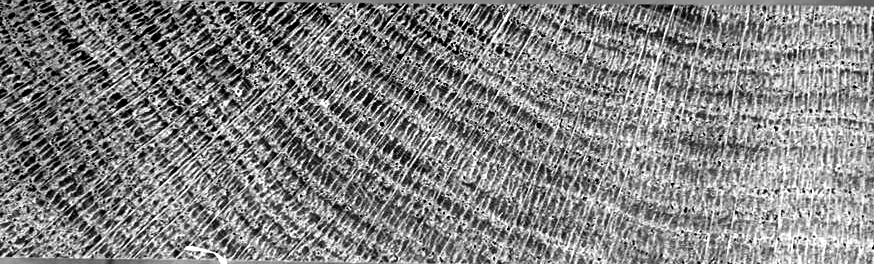
Two pieces of the same species and dimensions may have different growth-ring arrangements. These differences determine local material directions and can alter the response to moisture-content changes. The challenge is to incorporate this piece-specific structure into the calculation.
The scientific question is therefore precise: what useful mechanical information can be obtained from an end-grain photograph, and how much does it improve prediction compared with a simpler material description?
From the image
to the mechanical model
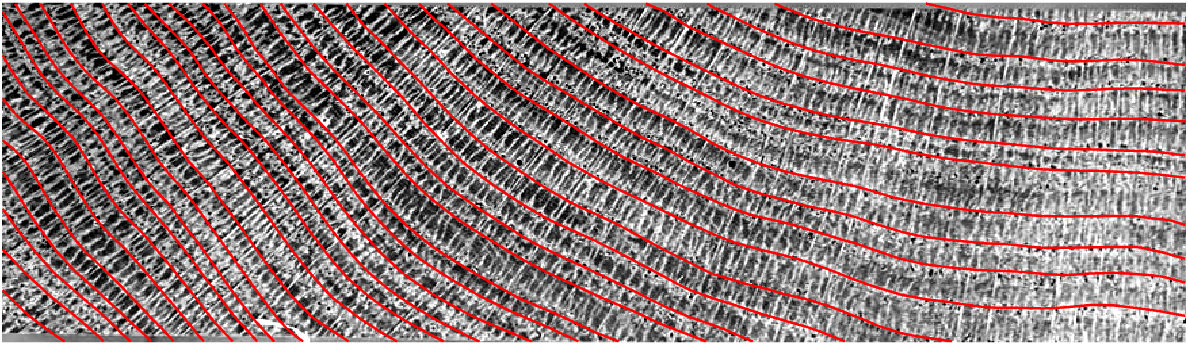
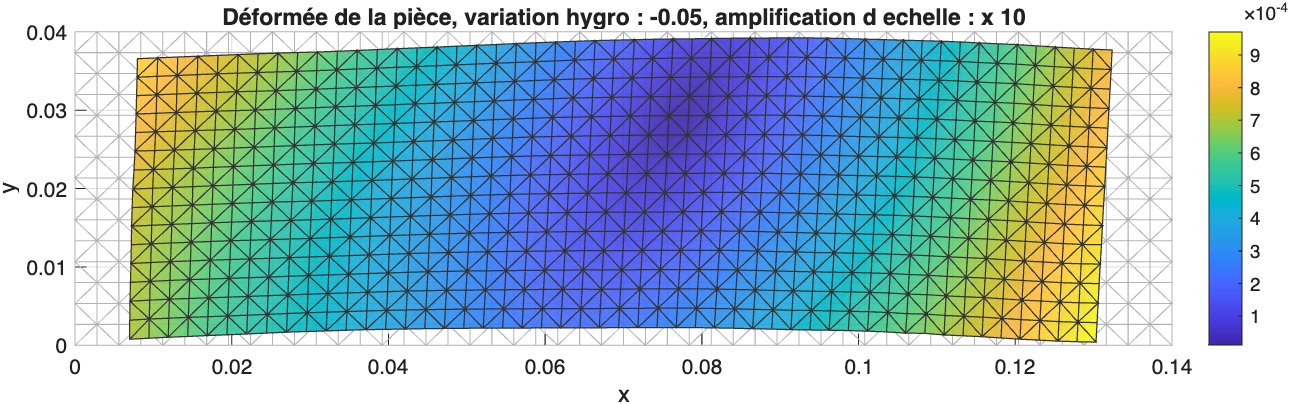
The WoodSim workflow combines image analysis and wood mechanics. A neural network identifies growth rings and estimates local directions in the cross-section. This information feeds a finite element model that calculates the response to a change in moisture content.
The photograph does not provide all the necessary data. Material properties, moisture conditions, restraints and assumptions about what the cross-section represents must be defined separately. Connecting these inputs without overstating their accuracy is an integral part of the research.
Measuring what
the image contributes
The validation approach will compare, on the same piece under identical conditions, a calculation using uniform orientation, one based on directions annotated in the image, and one using directions predicted by WoodSim.
Comparing these calculations with measurements should help distinguish the contribution of local wood structure from image-reading and mechanical-model errors. These effects can interact: comparing them does not fully isolate them. The experimental campaign has yet to be carried out; the visuals shown are numerical examples.
Defining a range
of confidence
The goal is more than an image of deformation. We need to establish when a prediction is accurate enough to inform design or fabrication choices, and quantify the associated uncertainty.
This research aims to connect the visible character of an individual piece to measurable differences in behaviour. The tool is meaningful only if this additional information genuinely improves understanding and decision-making in the workshop.