Research at Atelier DeBrab develops through an ongoing dialogue between theory and experimentation. Working with materials provides a field of exploration where geometry, mechanics and computational science meet cabinetmaking expertise.
Bringing scientific models into contact with material reality informs an approach aimed at better understanding wood behaviour, exploring new forms and developing innovative fabrication processes.
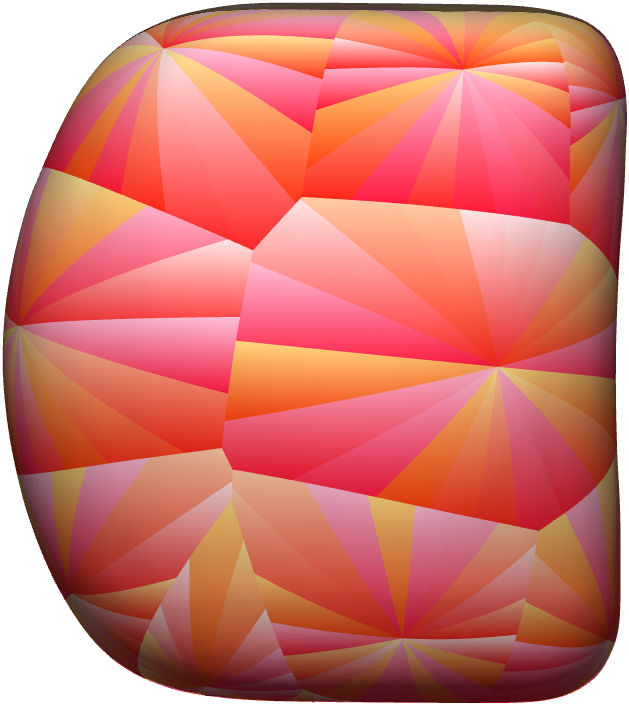
Digital model
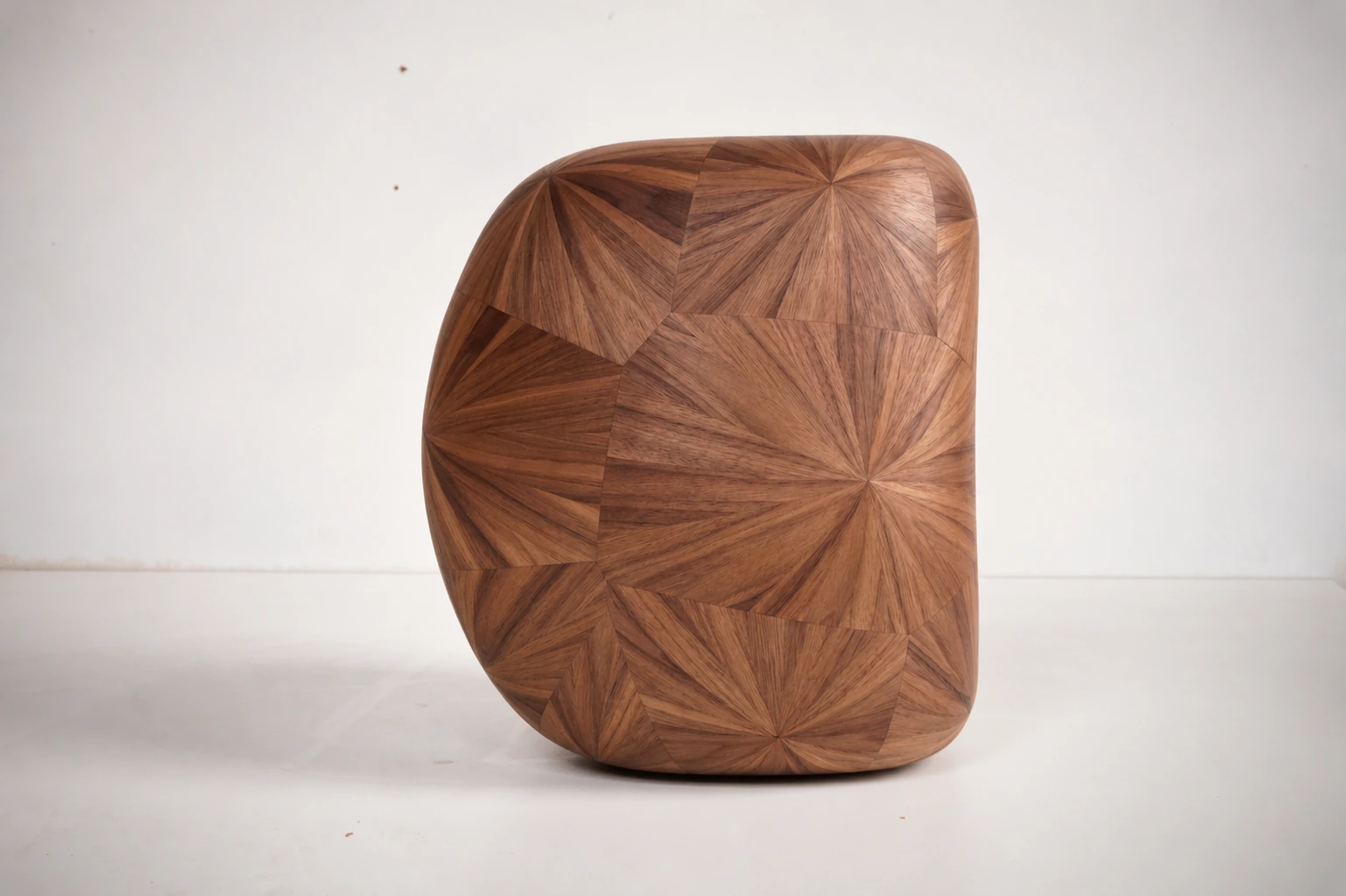
Fabrication
From the digital model to the walnut-veneered coffee table.
01Geometry · mechanics · pattern-making
Geoveneer
Geometry and mechanics of veneering complex surfaces
How can a doubly curved surface be covered with wood when an initially flat sheet cannot follow its geometry without deforming?
Geoveneer studies this problem through differential geometry, material mechanics and numerical optimisation. Research focuses on generating cutting patterns, orienting the wood grain, controlling deformation and arranging joints.
This work has led to a digital veneering process, now used in the workshop to make pieces with complex geometries. It continues through research into optimising cutting networks and the geometric limits of pattern-making.
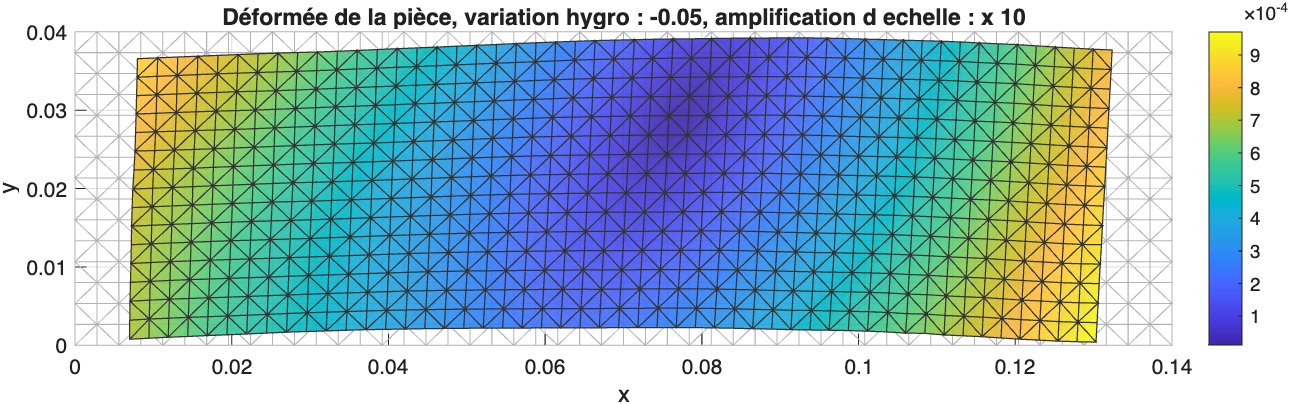
Numerical example of the WoodSim workflow. Deformation magnified × 10.
02Wood anatomy · mechanics · prediction
WoodSim
From wood structure to predicting its behaviour
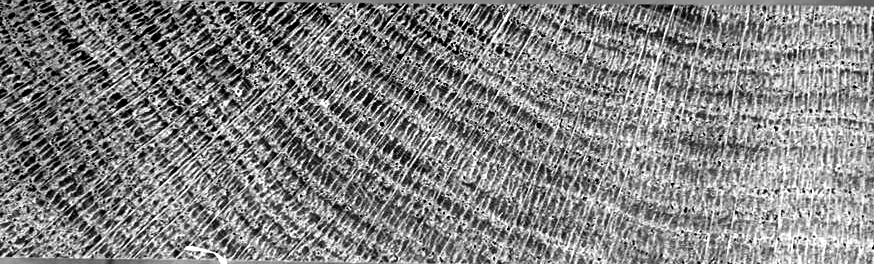
The mechanical behaviour of wood depends in particular on its internal structure. Growth-ring orientation, anisotropy and changes in humidity influence the deformation of each piece.
WoodSim explores the possibility of predicting this deformation from an end-grain photograph. The method combines image analysis, identification of material directions and finite element analysis.
The research aims to determine how much this piece-specific information improves predictions, and how accurately numerical results can be compared with the actual behaviour of wood.

 Digital model
 Fabrication